


(TCHK) – Mr. Tran Kim Chung, Chairman of CT Group Hi-Tech, proposed that Vietnam prioritize the development of specialized semiconductor chips for the low-altitude economy and unmanned aerial vehicles (UAVs).
On November 17, 2026, at the scientific conference titled “Strategic Models for Building R&D Capabilities and Participating in Global Value Chains in Vietnam’s Semiconductor Industry,” Mr. Tran Kim Chung, Chairman of CT Group Hi-Tech, proposed that Vietnam focus on developing specialized chips for the low-altitude economy, UAVs, and emerging technology sectors.
According to Mr. Chung, Vietnam does not necessarily need to begin by investing in semiconductor fabrication plants costing tens of billions of US dollars. Domestic enterprises could instead start with specialized technologies driven by the practical needs of emerging economic sectors, particularly those in which Vietnamese companies have the potential to develop and control end products.

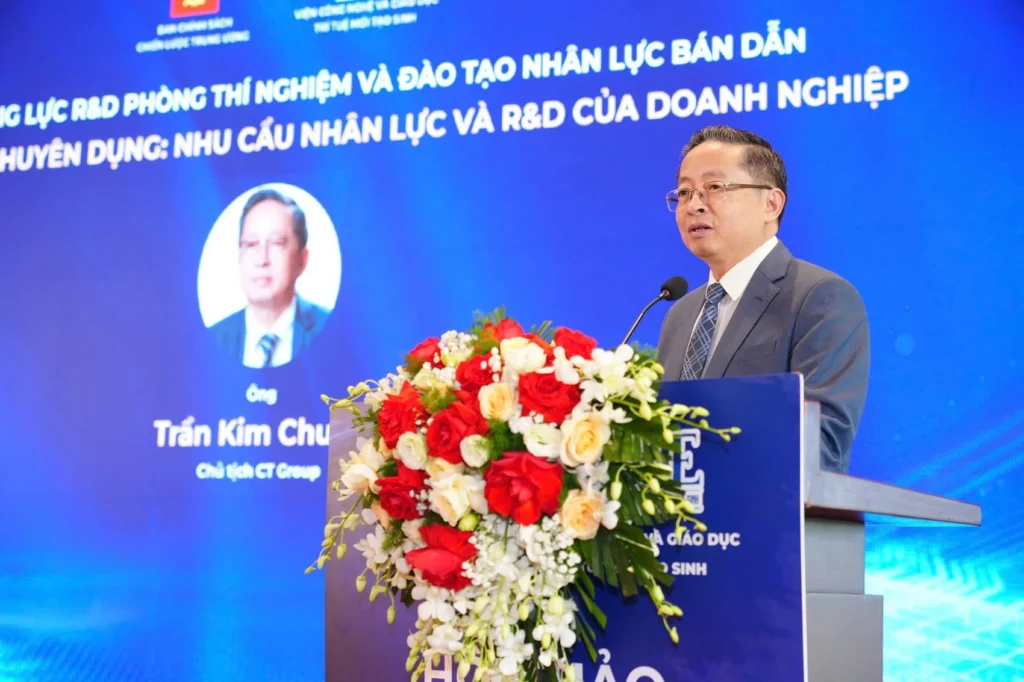
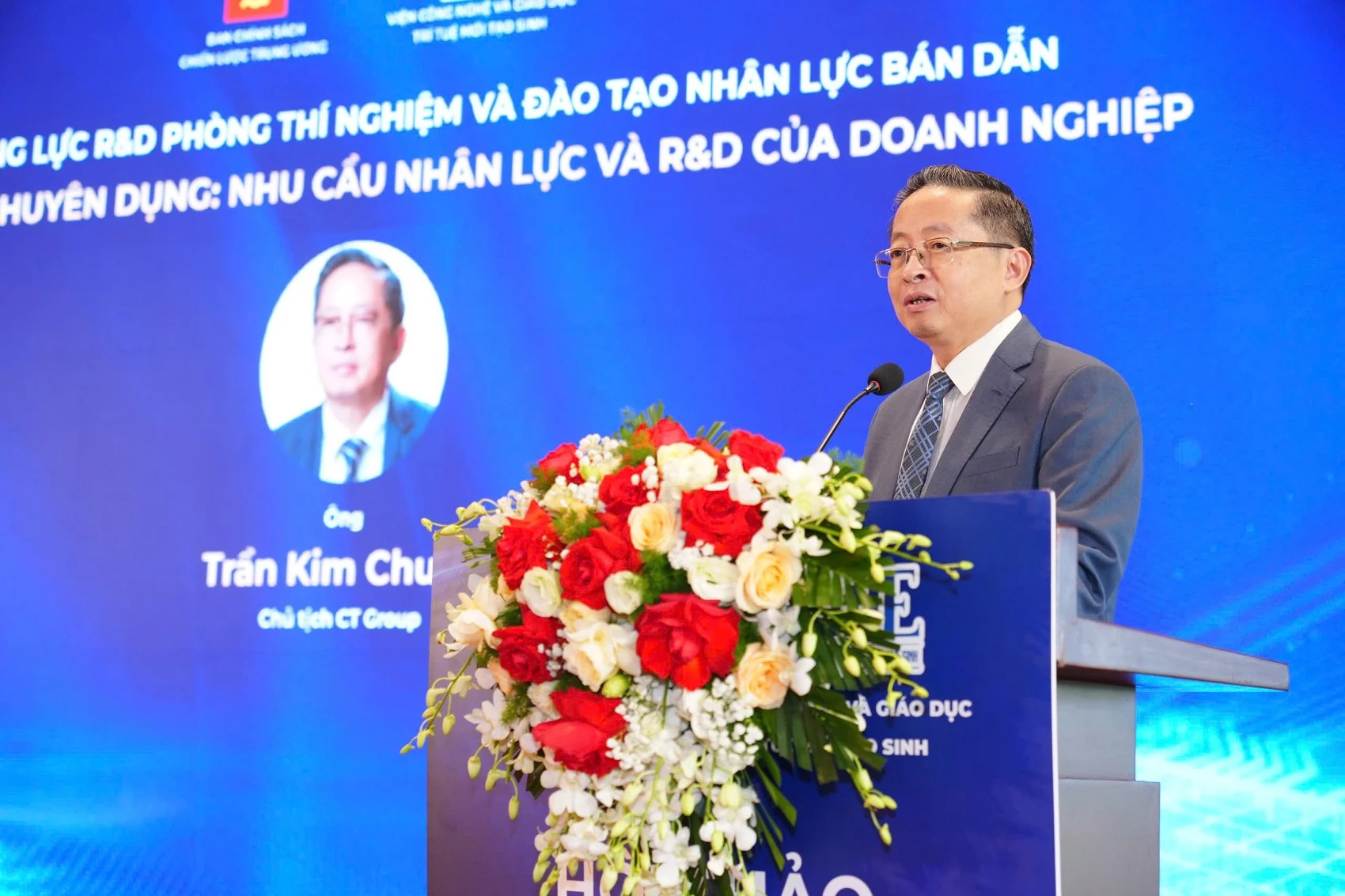
Mr. Tran Kim Chung, Chairman of CT Group Hi-Tech, speaking at the conference.
Specialized Semiconductor Chips for the Low-Altitude Economy and UAVs
From a business perspective, Mr. Tran Kim Chung stated that CT Group Hi-Tech is developing a high-tech ecosystem encompassing technologies for the low-altitude economy, semiconductors, artificial intelligence, and automation systems.
One of his proposals is to develop specialized semiconductor chips for the low-altitude economy. According to Mr. Chung, this is an emerging sector worldwide, with countries still conducting research and developing semiconductor technologies to support its applications.
He emphasized that specialized chips play an important role in simultaneously managing large numbers of devices. Such chips are among the essential hardware components required to develop applications within the low-altitude economy.
In addition, he proposed prioritizing gallium nitride (GaN) semiconductor chips. According to Mr. Chung, the capital investment required for a GaN chip fabrication plant is significantly lower than that of a silicon chip fabrication plant, while offering comparable performance. He also cited an annual growth rate of approximately 35% for the GaN chip industry, compared with 8–9% for the silicon chip industry.

The event brought together approximately 200 delegates, including policymakers, experts, scientists, representatives of research institutes, universities, technology corporations, financial institutions, investment funds, and leading semiconductor specialists from Vietnam and abroad.
According to the CT Group Chairman, gallium nitride chips are well aligned with Vietnam’s technological capabilities and represent an area in which domestic enterprises could actively participate in development.
Notably, Mr. Chung stated that high-power semiconductor chips could be applied across various sectors, including satellite equipment, navigation systems, UAV components, laser devices, unmanned vehicles, and data centers. However, given their potential applications in security and national defense, the development of these chip technologies requires careful consideration.
To establish domestic semiconductor technological capabilities, Mr. Tran Kim Chung emphasized that the R&D ecosystem should be built around products in which Vietnam could establish a significant position within the next five years, supported by market demand and research and development capabilities.
In addition to establishing shared research laboratories, he proposed developing human resources through practical projects rather than implementing training programs without clearly defined objectives. Given limited resources, he emphasized the need to determine the specific number of engineers required for each chip category and individual project.
At the conference, Mr. Chung also introduced the semiconductor manufacturing plant model currently being developed by CT Group, which includes plans for gallium nitride chip production. He noted that several organizations had expressed interest in potential cooperation and the signing of memoranda of understanding (MoUs) related to these semiconductor products.
According to Mr. Chung, market demand for gallium nitride chips is an important consideration, particularly given the challenges associated with accessing and purchasing these products in international markets.
Accurately Assessing Vietnam’s Position in the Global Semiconductor Value Chain
The scientific conference, titled “Strategic Models for Building R&D Capabilities and Participating in Global Value Chains in Vietnam’s Semiconductor Industry,” was chaired by the Commission for Policy and Strategy of the Central Committee of the Communist Party of Viet Nam, in collaboration with the Institute of Generative New Intelligence Technology and Education (IGNITE).
The conference aimed to translate the objectives of the Politburo’s Resolution No. 57-NQ/TW on breakthroughs in science, technology, innovation, and national digital transformation into concrete actions, while contributing to the implementation of strategic directions for transforming Vietnam’s development model.
Speaking at the conference, Mr. Nguyen Hoang Giang, Deputy Head of the Commission for Policy and Strategy, emphasized that the semiconductor industry is a foundational industry playing a crucial role in economic development, technological self-reliance, national competitiveness, and the country’s international standing.
According to Mr. Giang, Vietnam has made initial progress in developing its semiconductor industry, gradually establishing a workforce of integrated circuit (IC) design engineers, research and training institutions, enterprises, and investment projects.
However, R&D capabilities, technological product development, the scale of domestic enterprises, and participation in high-value-added segments of the semiconductor value chain remain limited.
Therefore, it is essential to accurately assess Vietnam’s position in the global semiconductor value chain, identify its competitive advantages and technological gaps, and determine the areas with the greatest potential for breakthroughs.
According to Deputy Minister of Science and Technology Le Xuan Dinh, the Ministry has identified niche semiconductor segments associated with strategic technologies as priorities for R&D investment. These include artificial intelligence (AI) chips, Internet of Things (IoT) chips, compound semiconductor power devices for green energy applications, and telecommunications equipment supporting 5G and 6G networks.

Deputy Minister of Science and Technology Le Xuan Dinh speaking at the conference.
In addition, the Ministry is pursuing reforms to science and technology financing mechanisms, with an emphasis on commissioning research to address practical challenges, accepting the inherent risks of research activities, and developing highly qualified R&D personnel through real-world projects.
Deputy Minister Le Xuan Dinh also stated that the Ministry of Science and Technology would bring the National Semiconductor Chip Prototyping Support Center into operation, providing access to high-performance server systems, electronic design automation (EDA) software, and internationally standardized testing and measurement laboratories at preferential rates for research institutes, universities, and enterprises.
Discussions at the conference focused on strengthening R&D capabilities, developing the semiconductor ecosystem, and fostering collaboration among government agencies, scientists, businesses, investors, and banks to mobilize resources for Vietnam’s semiconductor industry.
The Politburo’s Resolution No. 57-NQ/TW, issued on December 22, 2024, identifies science, technology, innovation, and digital transformation as the foremost drivers of national development.
The Resolution sets a target for the digital economy to contribute at least 30% of GDP by 2030, while prioritizing the development of strategic technologies, including artificial intelligence, semiconductors, robotics, automation, and biotechnology.
Source: Aviation Magazine – Tạp chí Hàng Không
________________________
Follow CT Group Hi-Tech on Facebook for the latest updates and news!